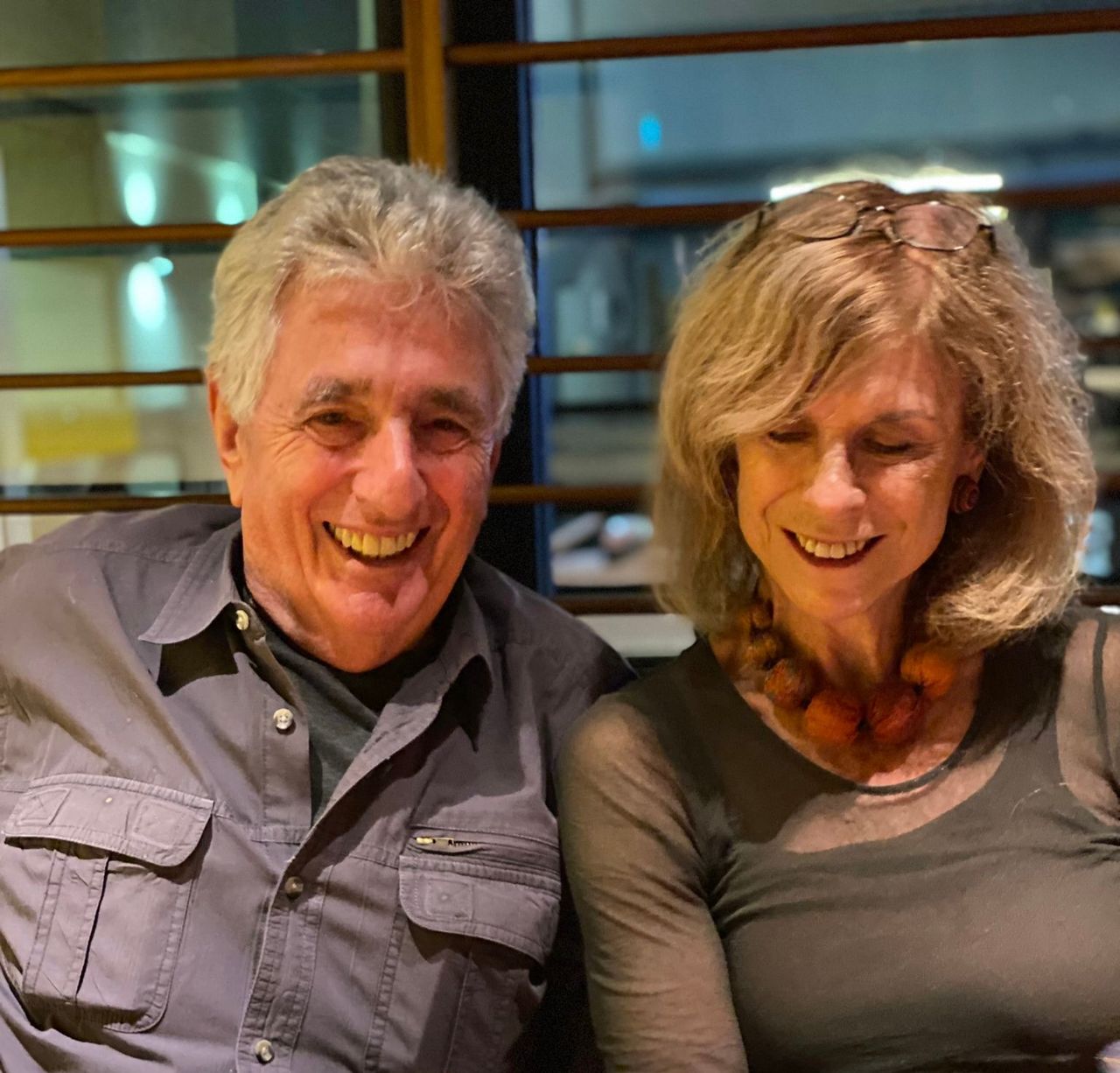
An international retirement celebration was held to honor the long, widely celebrated careers of John and Jean Comaroff on July 6, 2024. Held on zoom and timed to permit participants to join from across the world, over one hundred and twenty-five took part; many who could not sent messages of appreciation and congratulation. Some forty spoke. They included former and present students, colleagues, and comrades from North and South America, Europe, South and Southeast Asia, and Africa. Over almost four hours, they offered reminiscences spanning almost fifty years – many of them deeply moving – of the impact of the Comaroffs on their lives and their careers, stressing the ways in which they were encouraged to find their own unique voices, to stretch their intellectual ambitions and endeavors to the full, to be unafraid to take on tough challenges and unpopular positions. Words that resounded throughout were generosity, kindness, care, intellectual rigor, scholarly legacy. So did humorous references to the Comaroffs’ famed (very lengthy) letters of reference, the sheer number of their doctoral advisees, their quick responses to even the most untimely and unlikely student requests, and the mystery of when, if ever, they slept. Jean and John ended the event by expressing their gratitude not just for the sumptuous words of praise and the insightful comments about their scholarly oeuvre, but for everything that they have learned from their from students, from their colleagues and collaborators, from their children, Josh and Jane – both scholars of note in their own right – and from those with whom they built the scholarly circle around them at Chicago and Harvard. Emphasizing the difficult, destructive challenges confronting academia and the planet at large, they made a plea for opening up possibilities in the face of the impossible, for scholarship committed to the pursuit of a more human, equal and equitable world. For hope against despair.
Author: howdypress
-

John Comaroff Publishes A Reflection On Sovereignty, Postcoloniality And The Commodification Of Traditional Authority In South Africa
A number of ‘customary’ African kings and chiefs – historically accountable to the will of their subjects – have sought to turn their offices into lucrative sources of accumulation; indeed, into a form of monopoly capital founded on the assertion of a political sovereignty unaccountable to any other. What historical conditions have laid the ground for this transformation? How widespread is it? What, in the ‘new’ economies, technologies, ideologies and politics of the global order, has given the Kingdom of Custom its material, affective and political heft in this, the twenty-first century? In addressing these questions with particular focus on South Africa, Comaroff explores the relationship between ‘local’ structural conditions and those exogenous to the country in order to explain ongoing transformations in traditional authority – and their impact on the political and cultural economy of the nation at large.
The essay, “Chiefship, Pty unLtd.: Reflections on Sovereign Un/accountability, Past and Present,” is published in the European anthropology journal, Ethnos; see https://www.tandfonline.com/doi/full/10.1080/00141844.2023.2261652.
Synopsis: This narrative begins with the story of a king from the Eastern Cape Province exercising sovereignty over life and death – and, in so doing, pitting himself, along with other South African traditional leaders, against the state, its constitution and the liberal democratic ideology of a nation recently reborn. It documents a protracted, ongoing struggle – with roots deep in the colonial epoch – between two political theologies. One is civic-national, the other ethno-racial. Each aspires to a hegemony that remains incomplete. This struggle has been, is being, fought out in many registers: over land, labor, law, life-and-death; over recognition, rights, regulation and rents. It has been interminably messy, with lots of ups and downs, lots at stake, lots more to come. Its broader, exogenous context has arisen from changes in the global order, its economies, technologies, ideologies, politics. Its proximate context lies in the complex, labile sociology of post-apartheid South Africa. In respect of the latter, of the proximate, Comaroff shows how rising identity politics have given the Kingdom of Custom – a thoroughly anti-liberal, Afromodernist construct – renewed affective, economic and electoral heft for many black South Africans. The constitutional protection of the customary, and its sacralization, has fueled insistent chiefly claims to territory, material and immaterial property, and, most of all, sovereign unaccountability; claims justified by the reconstruction of so-called traditional authority under colonialism, in violation of indigenous theories and practices of government. Comaroff also shows how the broader context – the neoliberal turn to the ethic of the market, the privatization of public assets, the stress on deregulation and the outsourcing of the state – has engendered the means and ends for commodifying cultural difference, turning it into rents and profits; indeed, into corporate ethnicity and, for so-called ‘business chiefs,’ into new species of political and financial capital. In sum, Chiefship Pty unLtd, the phenomenon, is a creature of contemporary political-economy, a hyphe-nated fusion,
both hot and cold, of the exogenous and the proximate: hot, in that it rests on new passions; cold, in that its transactions occur within the chill logic of cost–benefit calculation. If these are the conditions, both necessary and sufficient, that have remade the Kingdom of Custom, those who rule in its name range widely in their capacity to reap its harvest; this for reasons ecological, cultural, political, transactional, circumstantial. Therein lies the complex relationship between the Kingdom and its Kings: the forms of accumulation, of monopoly capital, that the kingdom promises and potentiates – mythically grounded in a promiscuous mix of revisionist history and putative ontology, facilitated by conditions in the contemporary global order – depend in large measure on the capacity of living rulers to husband the resources at their disposal. And, more importantly, to sustain the integrity of the king’s two bodies against the political forces that may drive a wedge between them. Thus, for better or worse – depending on one’s ideological take on such matters – does Chiefship Pty unLtd move from an aspirational imagining to a more or less accomplished fact.
-
COMAROFFS PUBLISH NEW ESSAY ON GENERATIONS AND GENERATIONALITY
John and Jean Comaroff recently published a pathbreaking new essay on a topic of critical importance in the contemporary world: generation and intergenerational relations. It focused on the social, material, cultural, political rationalities that different generations bring to those relations with each other – and why there is so much talk these days on “the generation war.” Published in The Monist (Oxford University Press, Volume 106, Issue 2, April 2023, 165-180), one of the oldest and most distinguished journals of philosophy, the Comaroffs offer the following synopsis of their essay:
“How are relations between generations shifting? As anthropologists, our take on intergenerational relations and the rationalities on which they are based—i.e., generationality—is historically situated. In many parts of the world, generation has become a major axis of social and political struggle, sometimes of bitter conflict. This, we argue, is a corollary of post-Cold War transformations in economy and society—and a radical rupture in processes of social reproduction. These transformations have conduced to the perception of a rising ‘generation war.’ How, then, in these circumstances, are we to think anew of intergenerational relations—and justice?”
In addressing these questions, the essay opens up a new theoretical framework for understanding contemporary “generationality” and its impact on the history of the present.
-

FIFTIETH ANNIVERSARY PUBLICATION OF THE DIARY OF SOL T. PLAATJE
The Boer War Diary of Sol. T. Plaatje, edited by John Comaroff, was first published in 1973 by Macmillan, along with a limited leather-bound edition put out simultaneously. Comaroff came across the manuscript of the diary – now a famous publication in South Africa – when he was a doctoral student in the Mafeking District adjacent to the Botswana border in 1969. In the course of his research he looked for indigenous historical documents and came upon a tatty scrapbook in the possession of the descendants of Solomon Tshekisho Plaatje; folded into that scrapbook was the diary. The Diary documents the historically notable siege of Mafeking, a critical theater in the so-called South African (or, in the past, Anglo-Boer) War of 1899-1902. It is the only published account by a Black person involved in that war; Plaatje was a court interpreter to the British authorities. It offers a memorably vivid, memorably lucid, and profoundly poignant account of the experience of the siege from the perspective of the indigenous inhabitants of Mafeking – or, in the Setswana vernacular, Mahikeng. This is especially noteworthy, since the protagonists of the conflict, Boer and Briton alike, sought to sustain the myth that this was a “White Man’s War,” a myth Plaatje exploded for once and for all, ensuring a place for his Diary in the subsequent historiography of the siege.
Plaatje was to become a figure of great note in South Africa. Despite a limited education, he rose to become one of the country’s noted black journalists, the founding General Secretary of the South African Native National Congress (later the African National Conference), author of the first novel to be published in the country by a Black South African, Mhudi, and Native Life in South Africa, a memorable account of the Natives’ Land Act of 1913, which laid the ground for the racial geography of apartheid South Africa, translator of Shakespeare into Setswana, newspaper editor, and much besides. After his death in 1932, Plaatje came largely to be forgotten: the erasure of Black scholars and public intellectuals was itself a product of the epistemic violence of the notorious apartheid regime.
After the end of the apartheid regime in 1994, Sol Plaatje gradually assumed his rightful role in the pantheon of South African public intellectuals and historical figures. Now there is a municipality, a university, and public buildings named after him. He is recognized in innumerable ways in the country. Brian Willan has published a truly magisterial biography, Sol Plaatje: A Life of Solomon Tshekisho Plaatje, 1876–1932 (Johannesburg: Jacana, 2018), and the Diary itself has seen several revisions and new editions edited by Comaroff and Willan, one in 1999 at the centenary of the Siege of Mafeking. Each version carried more detailed annotations and historical contextualizations by the editors, amplifying the significance of the text. A recent volume, In Revisiting Sol Plaatje’s Mafeking Diary: Reconstruction and Reconsideration, edited by Willan and Sabata-mpho Mokae (Jacana Media 2023), explores the literary merit of the text, which has been the subject of a large, diverse, and enthusiastic scholarly literature.
In late 2023 fifty years after its was first published, a new, significanly enlarged edition of the Diary was published – an event which marks the sheer longevity of interest in the volume, which is now taught in schools and colleges. Published by a Black South African press, Xarra Books, it includes a foreword by Sabata-Mpho Mokae and a large number of hitherto unpublished photo images.
-

Case against Harvard over the alleged misconduct of John Comaroff ends in an agreed Dismissal
On August 14, 2024, the United States District Court for the District of Massachusetts issued the following statement announcing the end of the notorious, hugely publicized lawsuit filed by three students against Harvard, allegedly for its “decade-long failure to protect students from sexual abuse and career-ending retaliation” on the part of Professor John Comaroff: “Now come the parties in the above-entitled action, by their attorneys, and hereby stipulate and agree that the action be Dismissed, with prejudice” – that is, cannot be reopened – “and without costs.”
The case was originally filed in February, 2022, and amended in June that year amidst a huge publicity campaign mounted by the plaintiffs.
A few months later, in December, it was announced that the action had been moved to mediation. Harvard, characteristically, offered no comment on the outcome. The plaintiffs lawyers offered a bland statement to the effect that they were proud of the bravery of the clients in speaking out about “significant issues” and glad that they “can now move on with their lives and careers.”
On August 19, Inside Higher Education reported that “Harvard Students Agree to Drop Suit over Comaroff’s Alleged Harassment,” having agreed with the University to file a motion “agreeing to dismiss the case without costs.” It also noted that, while “some media outlets have reported that there is a settlement,” none has actually been made public. In sum, there is no known factual basis for those reports.
-

Dismissal “with prejudice” of case against Harvard vindicates Professor John Comaroff
The years-long campaign to smear and destroy the career and reputation of distinguished Harvard Professor of Anthropology and African and African American Studies John L. Comaroff collapsed on Wednesday with the dismissal “with prejudice” of the civil suit brought by three graduate students against Harvard University. While the settlement does not compel the plaintiff to cover court and related legal costs, the outcome discredits their campaign and effectively vindicates Professor Comaroff.
When a case is settled “with prejudice,” it means that the case is closed permanently, and the plaintiffs are barred from bringing another lawsuit on the same claim. This finality implies that the lawsuit filed by graduate students Margaret G. Czerwienski, Lilia M. Kilburn and Amulya Mandava—who claimed without any facts or evidence that Professor Comaroff had engaged in sexual harassment and sued the university for not acting to remove him—was fundamentally flawed, without merit and cannot be brought up again.
The “without costs” aspect simply mitigates the financial burden but does not lessen the negative legal implications of the dismissal with prejudice.
The ignominious end of the lawsuit, which should never have been brought in the first place, deals another major blow to the #MeToo campaign of recent years. Since 2017, this campaign, hostile to essential provisions of legal due process, has destroyed the careers of individuals based on unsubstantiated allegations and innuendo.
Responding to the failure of the slander campaign against Comaroff, the law firm representing the three graduate students, Sanford Heisler Sharp, flippantly declared in a statement on Wednesday, “We are glad that our clients will now be able to move on with their lives and careers.” In other words, having created havoc with their vindictive and self-promoting witch hunt, they are free to embark on their next adventure.
But for Professor Comaroff, a consequence of the smear campaign is that the professor retired from Harvard on June 30 without achieving emeritus status, an honor most tenured Faculty of Arts and Sciences professors receive upon retirement.
John Comaroff was born in South Africa and attended University of Cape Town, where he began his studies in anthropology. He spent 34 years teaching, along with his wife Jean Comaroff, at the University of Chicago. The husband and wife joined Harvard in 2012.
In May 2020, following a scandalous article published by the Harvard Crimson, the university administration placed Professor Comaroff on paid administrative leave while an investigation into allegations of “unwanted touching, verbal sexual harassment, and professional retaliation” was being conducted.
Responding to the accusations, which were submitted by the students to Harvard’s Title IX office, Comaroff wrote in an email that he “denies all allegations of sexual harassment and retaliation,” and said that the Harvard administration actions against him were “prejudicial to the fair determination of any claims” and “a violation of the Harvard University Sexual Harassment Policy and Proc[e]dure’s confidentiality rules.” He was also asked by the Anthropology Department not to teach a course.
At the conclusion of the investigation, the university found Comaroff “responsible solely for verbal sexual harassment arising from a brief conversation during an office hour advising session. The advice he gave concerned the student’s physical security in field research.”
According to the details of the investigation, Comaroff had attempted to explain to a gay female student that traveling with her partner in Cameroon, where homosexuality is illegal, could lead to sexual violence. His lawyers explained that the professor insisted “that it was not only his right, but his moral duty, to so advise her, because her proposed plans were objectively physically dangerous to her. The investigators found that he had no sexual or romantic intention.”
The investigation found that the evidence did not support the accusation of “unwanted sexual contact” and found him “not responsible for any of the other two complainants’ allegations.”
Responding to the witch-hunting atmosphere, the university administration launched a second kangaroo court-style investigation that found the professor “was responsible for alleged unprofessional (but entirely non-sexual) conduct in another office hours advising session.” On January 20, 2022, Faculty of Arts and Sciences Dean Claudine Gay placed Comaroff on unpaid administrative leave.
The sanctions against the professor were so outrageous that 38 professors signed a protest defending Comaroff on February 4, 2022, including Shakespeare scholar and cultural historian Stephen Greenblatt, literary critic and historian Henry Louis Gates Jr., historian Jill Lepore and law Professor Randall Kennedy.
It was at this point that the civil lawsuit that was dismissed this week was filed against Harvard. A witch-hunting campaign was mounted, and almost all of the professors who had supported Comaroff shamefully retracted their statements.
The WSWS wrote at the time (in “The concerted, cowardly #MeToo attack on Harvard Professor John Comaroff”):
Under the wretched heading, “We Retract,” the 34 present no evidence of wrongdoing by Comaroff, but simply apologize for their original concerns, which “were transparency, process and university procedures, which go beyond the merits of any individual case.” Why are they recanting their previous views? “We failed to appreciate the impact that this would have on our students”—in other words, they underestimated the ire their protest would provoke among the identity politics hysterics—“and we were lacking full information about the case.” Which “full information”? The professors don’t care to say.
The WSWS was alone in defending Comaroff, who has consistently denied all the allegations, and basic democratic rights. In a lengthy and detailed analysis of the suit published on March 15, 2022, “The politically driven campaign against Harvard anthropologist John Comaroff,” the WSWS wrote:
A case has been constructed against Comaroff that has no merit and no substance. There is nothing that remotely approaches proof of any wrongdoing. Rather, there are a series of allegations, many of them wild and preposterous, unsupported by any evidence. The acceptance of denunciations without verifiable evidence is the hallmark of a witch-hunt.
The WSWS took apart the alleged “facts” brought forward in the suit and exposed the underlying motivations. We wrote:
The Comaroff controversy could only occur in a degraded intellectual climate where irrationality is elevated above reason, emotional appeals above factual analysis. Decades of postmodern sophistry, subjectivism and linguistic “deconstruction,” which dominate the humanities, have played their part, weakening the attention paid to objectively existing, law-governed processes and shifting the focus to various forms of racialist, feminist and “left” myth-making, to self and identity and to one’s own “narrative” (and, inevitably, bruised feelings), regardless of its truth or non-truth. The Nietzschean spirit holds considerable sway: “The falseness of an opinion is not for us any objection to it.”
A climate of fear has been created on college campuses, in some ways worse than that prevailing during the McCarthy period, in which vast pressure is brought to bear on anyone audacious enough to come to the defense of those under attack. This has created an environment of humiliating recantations and escalating attacks on academic freedom and democratic rights.
While the lawsuit was underway, various groups on campus, including the UAW local for graduate students, staged provocations aimed at preventing Comaroff from being able to teach. In September 2022, the Socialist Equality Party and the International Youth and Students for Social Equality published a statement, “Defend Harvard Professor John Comaroff against the right-wing witch-hunt!”
Responding to the direct intervention of the White House and the Biden administration on the side of the plaintiffs in the suit, the statement explained:
The administration’s intrusion into the Comaroff case helps clarify the political and class dynamics at work. The White House and the Democrats have a significant stake in the campaign. It is being used to refocus political attention on gender and identity politics, to be wielded against a growing movement of the working class.
The statement added:
The deceitful, underhanded modus operandi of the anti-Comaroff forces needs to be exposed as widely and thoroughly as possible. Faculty and students have the responsibility to examine the facts objectively. Such an examination will inevitably lead to strong, vocal opposition to the ongoing witch-hunt.
In March 2023, Comaroff’s accusers mounted a right-wing provocation on the university campus under the title “Our Harvard Can Do Better,” which included demands that the administration declare a state of emergency “to address the sexual violence crisis on campus.”
In a statement, “The slanderous campaign of ‘Our Harvard Can Do Better’ against Professor John Comaroff,” the WSWS wrote:
Comaroff is guilty of nothing. There is no substance whatsoever to the claims against him, as exhaustive inquiries have demonstrated. The wild slanders of Our Harvard Can Do Better, aided and abetted by the Harvard Crimson and the unprincipled leadership of the Harvard Graduate Students Union (HGSU)—UAW Local 5118, are just that: slanders.
An indication that the court was finding that there was in fact no evidence behind the allegations in the lawsuit emerged in November 2023, when US District Court Judge Judith G. Dein referred the lawsuit to Magistrate Judge M. Paige Kelly for an alternative dispute resolution.
The final settlement dismissing the suit “with prejudice” is a vindication of Comaroff and an exposure of all those who participated in the right-wing, anti-democratic campaign against him.
-
Statement of Professor John Comaroff Upon His Retirement
I have been blessed with a long, fulfilling career as a scholar and teacher. For several decades I have taught and mentored many hundreds of students, among them more than 200 Ph.D. candidates. Many have gone on to impressive careers in a variety of disciplines. Needless to say, I am very proud of them and their achievements – and grateful to them for all that they have taught me. Through it all, I have had the opportunity to conduct extensive research and to write a large number of essays and books, many of them in collaboration with my wife of fifty- six years and life-long colleague, Jean Comaroff.
This body of work, like my pedagogy, has sought to promote wide-ranging scholarship, thoroughgoing critical awareness, and a deep sense of social responsibility. Teaching and research are what I do, so there is a significant measure of sadness in my decision to retire. Now, as I am about to enter my eightieth year, it is time to contemplate the next phase of my life.
Although it had no bearing on my decision to retire, it is no secret that, in 2021, a cloud was cast over me. In 2020, at a time when the Harvard Department of Anthropology was caught up in a moral panic occasioned by a very serious case of sexual misconduct, I was falsely accused of harassment by one Harvard student, and of threatening retaliation against two others. After a fourteen-month investigation, I was found not responsible for any of those accusations, save for one instance of alleged verbal impropriety. I had cautioned my student accuser of the well-established risk to her of potential sexual violence in a named African country where she was planning to do research; an entirely responsible warning, similar to the travel advisory issued by the U.S. Department of State that, somehow, was treated as sexual harassment under Harvard’s rather broadly stated rules.
Thereafter, in a second, highly questionable process in which I was given limited opportunity to defend myself and had no right of appeal, I was found responsible for “unprofessional conduct” arising out of a scholarly discussion with one of the students who had accused me of a threat. This was despite Harvard’s earlier investigation, which had already addressed the incident and found me not responsible. Moreover, the finding in this second investigation held that my intentions – which were wholly professional – were “irrelevant.”Subsequently, the three students filed a lawsuit against Harvard for not protecting them and other students against me. The suit repeated all of the allegations already found to lack merit, in more lurid, hyperbolic terms, while adding additional untested, and evidence-free claims of sexual misconduct. Moreover, the lawsuit was buttressed by a public relations campaign executed by a high-powered public relations firm engaged by the plaintiff’s attorneys, thus ensuring that these fact-free allegations would be circulated widely on campus and across the world without any due diligence, much less due process.
I, however, under Harvard’s rules of retaliation, had no right to reply. All this extraordinary attention, all the fur or, all the nastiness, arose out of two brief office-hour discussions, both academic in intent and content. As a further result of the lawsuit, an ugly, ferocious campaign was waged against me at Harvard by a small group of activists, people who have no knowledge of me, of my pedagogy, or of the facts of the case as established by Harvard’s thorough, largely exonerating investigation; this in order to make me a scapegoat for their larger concerns in a fight against the University. They misrepresented my actions, made new false accusations, occupied and disrupted my classrooms, pressured students not to take my courses or work with me, and suggested that my very presence on campus represents a danger to the entire University community — on its face, an absurdity. Unlike its responses to classroom protests this year, Harvard did nothing to protect my freedom to teach even when protesters occupied my classrooms. I cannot deny that this relentless campaign, and the negative public relations initiative in support of the meritless lawsuit, have been extremely hurtful given my decades of dedication to my teaching and my students. I believe that, in time, the indiscriminate rage, rabid personal attacks, and mob-rule tactics that sought to make political capital out of this whole unfortunate series of events will be replaced by a more informed, thoughtful, and honest dialogue on a number of very serious issues of current concern – among them, sexual harassment, campus safety, faculty-student relations, critical pedagogy, generational conflict, and academic freedom. Without responsible dialogue, the vitriol surrounding these matters will continue to do inestimable harm. It is not lost on me, as I leave Harvard, that I am very fortunate. I have had a richly rewarding career at the University of Manchester, the University of Chicago, and Harvard. Looking back on the past fifty-two years, I take special pleasure in the fact that I have remained connected with, and continue to be strongly supported by, many of my colleagues, past and present, and by a very large number of those whom I have had the privilege to teach and mentor. To all of them, I express my deepest appreciation. As for the future, there is much more for me still to do. I am already actively engaged in making plans for new work, new writing, new forms of pedagogy. And new challenges.
Postscript: On August 14, 2024, the court issued the following statement announcing the end of the lawsuit: “Now come the parties in the above-entitled action, by their attorneys, and hereby stipulate and agree that the action be Dismissed, with prejudice” – that is, cannot be reopened – “and without costs.” And so, a case that began in an angry uproar, divided the Harvard community, produced bitter attacks against me and my wife in the academy, and circulated across the world to banner headlines, died in a quiet whimper, with strikingly spare media attention – although it left a great deal of damage behind it.
-

WSWS Editorial on Harvard Lawsuit
Cambridge – The WSWS Editorial Board has opined on the case of Czerwienski v. Harvard.
-
Free Beacon reports on Harvard’s motions
Cambridge – The Washington Free Beacon weighs in on the latest developments in the case of Czerwienski v. Harvard.
-
Free Beacon reports on petition
Reporter Aaron Sibarium covers higher education issues for The Washington Free Beacon. He reports on the petition being promoted by the Harvard Graduate Students Union to pressure the University.
-

Comaroff Attorneys Object to Union Petition
Cambridge – John Comaroff’s attorneys object to a Harvard Graduate Student Union petition now circulating that demands sanctions and shunning, and threatens tenure revocation, on the basis of mere allegations. Attorney Ruth O’Meara-Costello expresses shock that HLS law students and a HLS law professor have joined in the witch-hunt tactics.
See letter here:
Statement from Ruth O’Meara-Costello protesting union petition
-
Harvard Files Response to Amended Complaint
Cambridge – On July 19, 2022, Harvard University filed an amended motion to dismiss Counts 1 through 9 of the complaint in Czerwienski v. Harvard University, with supporting documents, including an amended Memorandum of Law stating its legal arguments in support of the motion. It also submitted an amended motion for partial summary judgment on Count 10 of the complaint, supported by a new Statement of Material Facts, a new Memorandum of Law, and Exhibits, including several that are now unsealed.
See the documents here:
Defendant’s Motion to Dismiss Counts One Through Nine of Plaintiff’s Amended Complaint
Harvard’s Amended Motion for Partial Summary Judgment As to Counts Ten
Harvard’s Amended Statement of Material Facts
Affidavit of Ilissa Povich Dated 7-19-22
Amended Index of Exhibits to Affidavit of Illisa Povich Dated 7-19-22
Povich Exhibit 1, 2, 3, 4, 5, 6, 7, 8, 9, 10, 11, 12, 13, 14, 15, 16, 17, 18, 19, 20, 21, 22, 23, 24, 25, 26, 27, 28, 29, 30, 31, 32, 33, 34, 35, 36, 37.
-
Harvard objects to motion to unseal Title IX documents
Cambridge – Harvard lawyers asked a federal court judge on Tuesday not to unseal, with redactions, certain documents related to a Title IX complaint, arguing that to do so would reveal sensitive information about third parties, identify individuals and subject them to possible retaliation, discourage parties and witnesses from cooperating with Harvard’s Office of Dispute Resolution (ODR), and waste court resources. Harvard called the plaintiffs’ proposed redactions “one-sided” and added: “For example, the redactions plaintiffs propose to ODR’s notes of its interview with Kilburn’s therapist include information containing information that is clearly not confidential, but which might undermine Kilburn’s credibility.”
For more information, read the motions here:
-
World Socialist Web Site coverage
Reporter David Walsh continues his coverage of developments in Czerwienski v. Harvard University.
To read the story, click on the link:
-
Harvard Files Motions to Dismiss and for Summary Judgment
Cambridge, MA – Lawyers for Harvard University asked a U.S. District Court judge on May 31, 2022 to dismiss a civil lawsuit filed by three graduate students last year. Harvard filed a motion for summary judgment on count 10 of the lawsuit, which claimed that the University had improperly obtained and released one plaintiff’s therapy records, and supported it with numerous affidavits and internal records. Harvard filed a motion to dismiss the remaining counts of the lawsuit, citing failure to state a claim and statute of limitations deficiencies.
Please see the motions and supporting documents below:
- Memorandum of Law in Support of Harvard’s Motion for Partial Summary Judgement As To Count 10
- Defendant’s Memorandum in Support of its Motion to Dismiss Counts One through Nine of Plaintiff’s Complaint
- Defendant’s Motion to Dismiss Counts One Through Nine of Plaintiffs’ Complaint
- Defendant’s Motion for Leave to File Under Seal
- Joint Motion for Protective Order
- Corporate Disclosure Statement
- Defendant’s Motion For Leave to Exceed Page Limit
-

WSWS calls out identity politics at Harvard
Writer David Walsh compares Harvard’s current campaign against Anthropologist John Comaroff to the communist witch hunts waged by former U.S. Senator Joseph McCarthy’s during the 1950s in his article for the World Socialist web publication.
“There are more than a few parallels between the McCarthyite witch-hunts of the late 1940s and early 1950s and the present-day sexual misconduct campaign,” Walsh writes. “The current process too is characterized by denunciations and reckless, unproven allegations; the use of anonymous informants; instantaneous conviction and punishment by media; the overnight destruction of reputations and careers; banning and blacklisting; public humiliation and disgrace; demands for repentance and mea culpas; a portion of the population seized by hysteria; the cowardice and treachery of liberalism; contempt for due process and the presumption of innocence; the undermining of elementary democratic rights; and the strengthening of the state and police powers.”
To read the full article, click on the link:
-

Jean Comaroff and John Comaroff
Between 1976 and 2010, Alan Macfarlane, a professor in the Department of Sociology at Cambridge University, conducted a series of interviews with anthropologists from around the world. Two of those anthropologists included John and Jean Comaroff. They discussed their early lives, their work in the field, life under the Apartheid regime and anthropology, among other things.
-
Lawyers respond to civil suit
Norman Zalkind, Janet Halley, and Ruth O’Meara-Costello issue the following statement, on behalf of
their client, Professor John Comaroff, in response to the lawsuit filed today by plaintiffs Margaret
Czerwienski, Amulya Mandava, and Lilia Kilburn. Professor Comaroff categorically denies ever harassing or retaliating against any student.To address the lawsuit’s specific allegations, Professor Comaroff was never the subject of any Title IX or other complaint at the University of Chicago. There, as at Harvard, he was a sincerely devoted mentor to countless students.
Professor Comaroff denies the claim that he made advances on an unnamed second-year graduate
student. No such student has ever sought an investigation of claims against him. The only students
whose complaints Harvard has notified him of are the plaintiffs.Regarding the 2017 meeting between Ms. Mandava and Professor Comaroff, Ms. Mandava and
Professor Comaroff met at her request in order to speak about a grant proposal she was considering
submitting. The conversation turned to the topic of gossip, which was relevant to Ms. Mandava’s
academic topic, and Professor Comaroff spoke generally about its dangers in professional academic
settings. In doing so, he was repeating advice that he had given to countless students over the years, including while teaching a seminar on professionalization at the University of Chicago. He absolutely denies threatening Ms. Mandava or Ms. Czerwienski, during that meeting or at any other time. Harvard’s thorough Title IX investigation found that not only had he not retaliated against either
student—he was not even aware, during that meeting, of the rumors that the two were spreading about him. The truth is that Professor Comaroff consistently made every effort to assist these students and to advance their careers, both before and after the 2017 meeting.Regarding Ms. Kilburn, Professor Comaroff did not kiss her or touch her inappropriately at any time.
Harvard’s Title IX investigation, which lasted over a year and was extraordinarily thorough, concluded
that the evidence simply did not support claims that he had kissed or touched Ms. Kilburn. Allegations that he forbade her from working with her other advisor are simply false.Professor Comaroff did speak with Ms. Kilburn, who proposed to conduct fieldwork in Cameroon while traveling openly with her same-sex partner, about the risks that could attend that plan, including the risk of sexual violence. This was a necessary conversation for her safety and numerous faculty witnesses in the Title IX process attested that his advice was appropriate. The Title IX investigation found that he was motivated only by concern for Ms. Kilburn’s well-being and had no romantic or sexual intention, but that the advice nonetheless constituted sexual harassment. Professor Comaroff vehemently disputes this conclusion, which would cripple faculty members’ ability to use their best academic judgment in advising students about essential safety issues.
Professor Comaroff is not only a leading scholar in his field—he is a deeply caring person who has
devoted his energy for decades to mentoring and advancing generations of students. Attacks on his
career based on gossip and rumor rather than actual evidence are shameful. -
Comaroff’s lawyers denounce Harvard discipline
Following Dean Claudine Gay’s announcement today of sanctions against Harvard Professor John Comaroff, his attorneys seek to inform the public of the full context of this matter.
Following an exhaustive investigation lasting more than a year, involving allegations by three complainants, Title IX investigators found John Comaroff responsible solely for verbal sexual harassment arising from a brief conversation during an office hour advising session. The advice he gave concerned the student’s physical security in field research. He maintains that it was not only his right, but his moral duty, to so advise her, because her proposed plans were objectively physically dangerous to her. The investigators found that he had no sexual or romantic intention.
The same student accused Professor Comaroff of repeatedly imposing unwanted sexual contact on her. The Title IX investigators found that the evidence did not support those accusations, and found him not responsible for any of the other two complainants’ allegations.
Upon receipt of these results, Harvard opened a second, kangaroo court process – lacking the most elemental aspects of due process and artificially limited to a defective record – to reexamine conduct already thoroughly investigated in the Title IX process. This process resulted in an illegitimate finding that Professor Comaroff was responsible for alleged unprofessional (but entirely non-sexual) conduct in another office hours advising session. Even in the latter proceedings, the factfinder concluded that the alleged harm “may not have been intended.”
Professor Comaroff is represented by Harvard Law School professor Janet Halley and by Norman Zalkind and Ruth O’Meara-Costello of Zalkind Duncan & Bernstein LLP. Halley observed, “Harvard’s setting up a second, biased process because it did not like the results of its own Title IX investigation is a shocking demonstration of its willingness to set aside basic principles of fairness when under political pressure.”
Both office-hours sessions involved brief exchanges in which students regrettably took offense at appropriate advice. Both were well within professional standards and within Professor Comaroff’s right to academic freedom — and fully compliant with his obligations under Harvard’s sexual harassment policy. Halley commented, “What this boils down to: two students took offense at perfectly legitimate office-hours advice. Everyone who advises at Harvard should note this attack on academic freedom.”
Professor Comaroff said, “I categorically deny all the accusations against me and object strongly to the University’s failure to accord me a fair process and to respect my academic judgment.”
Sanctions under these circumstances, much less the severe sanctions announced today, are entirely inappropriate.
Contact: Norman Zalkind
Zalkind, Duncan & Bernstein
Nzalkind@zalkindlaw.com
-

Ethnicity, Inc., translated into Chinese
CAMBRIDGE, MA – A Chinese translation of John L. and Jean Comaroff’s pathbreaking Ethnicity, Inc., is underway and expected to be issued later this year. First published in 2009 by the University of Chicago Press in the USA and by the University of the Witwatersrand Press in South Africa, the book has been praised for charting a new field of research in the social sciences, and for having a field-altering effect on the study of ethnic identity. “The study of ethnicity and indeed of neoliberalism will never be the same after the publication of this book, ” anthropologist Keith Hart commented in the American Anthropologist. Matti Bunzl, Director of the Wien Museum in Austria, noted, ““The Comaroffs are among the very finest anthropologists working anywhere in the world today. As genuine leaders of the discipline, every new book they publish is an event, and this one is no exception. Ethnicity, Inc. will be a watershed for anyone looking for new ways to explain our neoliberal world. This extraordinarily lucid book is one of the most ambitious, wide-ranging, and thought-provoking pieces of anthropological scholarship written over the past few decades…”
Ethnicity, Inc. has already been translated into Spanish and Polish, and excerpted in a Czech publication. The University of Chicago Press has now issued a translation license to Rive Gauche Publishing House, via Andrew Nurnberg Associates International Ltd., for a “complex Chinese-language edition.”